Friday, August 21, 2026 — As I wrap up the day, I reflect on a short video about human relationships that left a lasting impression on me.
When people notice someone who has very few friends or rarely attends social gatherings, the default assumption is often that they "lack social skills" or have some personality flaw. However, this is a superficial misunderstanding. Truly strong individuals do not need an "audience" to validate their worth. Those who can fully endure solitude and master self-control cannot be easily swayed, manipulated, or intimidated by external pressure.
1. Common Misconceptions vs. The Reality of Solitary People
Society often looks at solitary individuals through a lens of prejudice, assuming they are isolated because they cannot fit in.
The reality, however, is quite the opposite. People who maintain minimal social circles have not failed to make connections; they have deliberately filtered out superficial noise. They do not rely on belonging or praise to sustain their self-esteem. Instead, their confidence comes entirely from within.
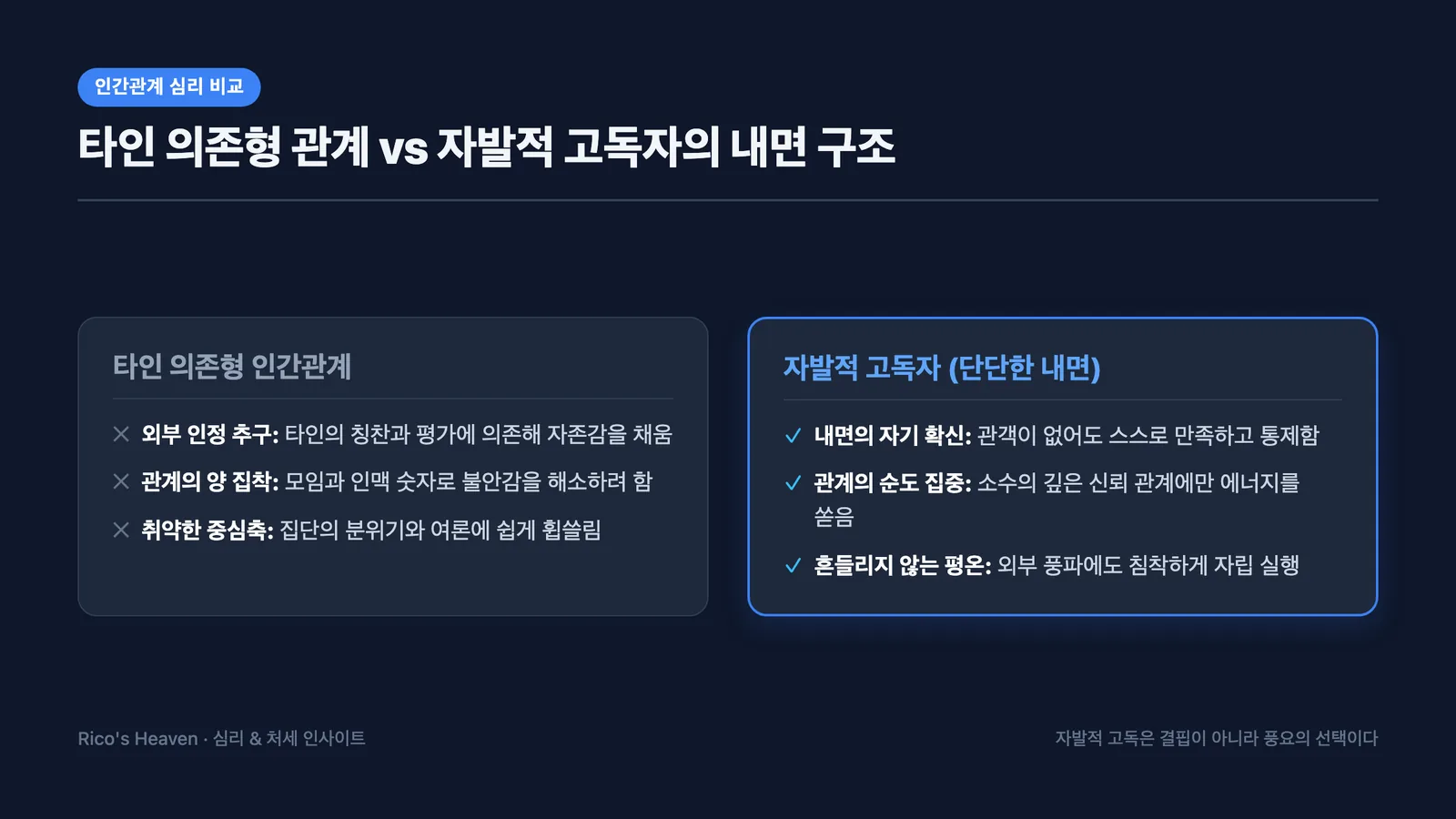
Most people require a crowd to feel secure and validated. In contrast, those who embrace solitude are already complete on their own. Because they crave neither applause nor approval, they cannot be emotionally manipulated — making them formidable and genuinely unshakable.
2. 4 Reasons Why People Without Friends Are Truly Formidable
Why should we never underestimate someone who walks alone? Here are the four psychological mechanisms behind their unyielding resilience.
1) Absolute Self-Control Without the Need for an 'Audience'
Most individuals spend enormous amounts of energy broadcasting their achievements to gain approval. Flaunting life on social media and seeking the spotlight in social groups stems from the need for an audience.
In contrast, those who are at peace in solitude find complete satisfaction within themselves. Free from the opinions of others, they remain calm regardless of praise or blame, guided strictly by their own principles and standards.
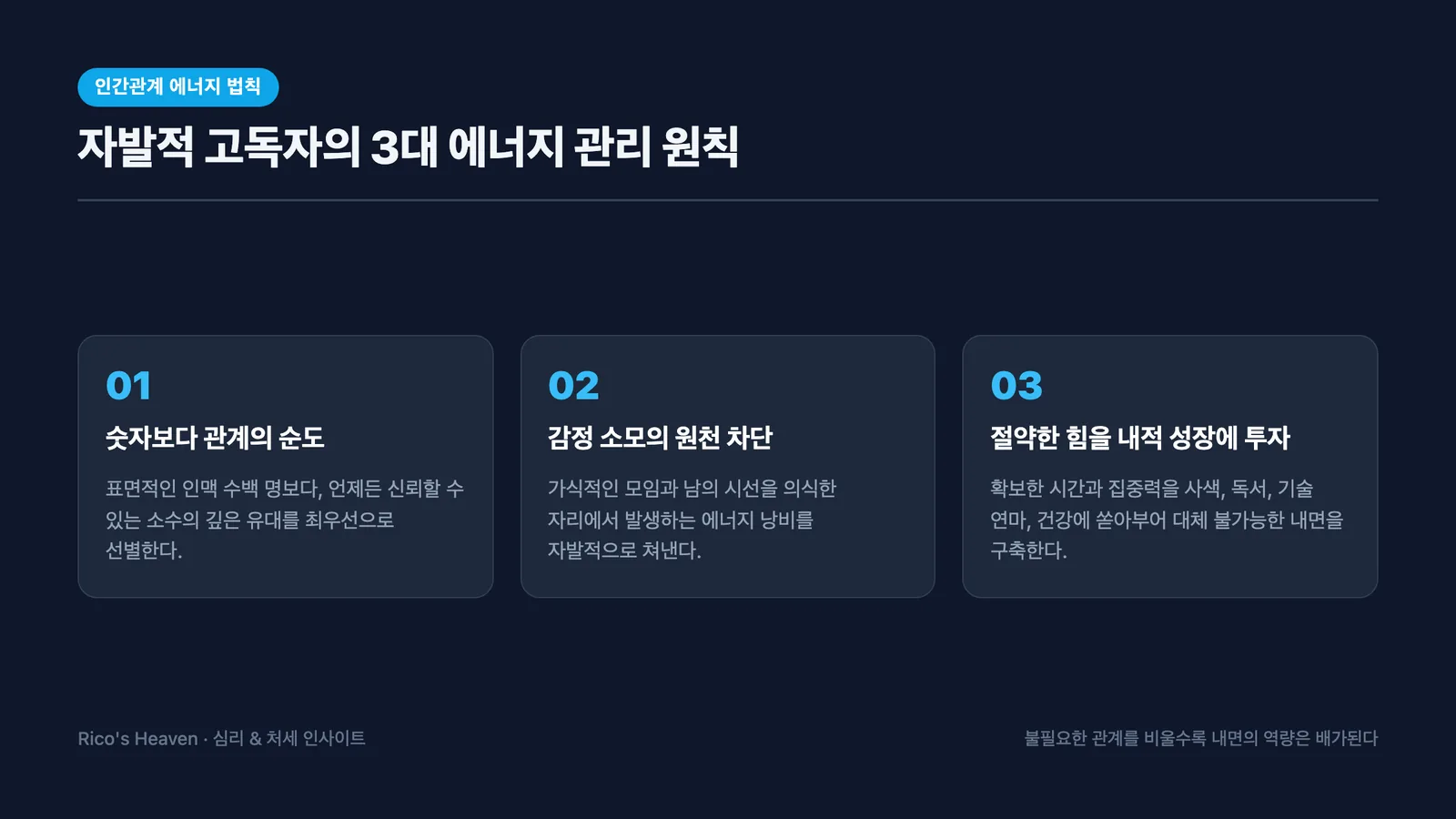
2) Overwhelming Efficiency by Eliminating Empty Interactions
One of the greatest wastes in life is squandering time and mental energy on superficial conversations and meaningless gatherings.
Autonomous individuals prioritize relationship purity over quantity. They maintain deep, loyal bonds with only one or two trusted companions while filtering out the rest. The mental energy saved is channeled into personal growth, reading, skill development, and health, compounding into immense inner strength over time.
3) An Unshakeable Inner Citadel Against External Turmoil
People who live constantly surrounded by crowds easily get swept away by collective anxiety and shifting public opinions.
Those comfortable in solitude have their anchor rooted deeply inside. Even during unexpected crises or chaotic environments, they maintain an objective, calm perspective from within their mental fortress.
4) Independent Execution Without Relying on Others in Crises
When emergencies strike, dependent people often seek external rescue or place blame elsewhere.
Self-reliant individuals, however, expect nothing from others. When a challenge arises, they quietly analyze the root cause and execute solutions independently. A person who needs no savior is the most resilient and unpredictable force in any environment.
3. Arthur Schopenhauer on the Essence of Solitude
The 19th-century philosopher Arthur Schopenhauer offered penetrating insights into the nature of solitude and human relationships.
Schopenhauer cautioned that excessive socializing causes individuals to lose their originality and inner richness. The moment you compromise yourself to match external expectations, misery inevitably follows.
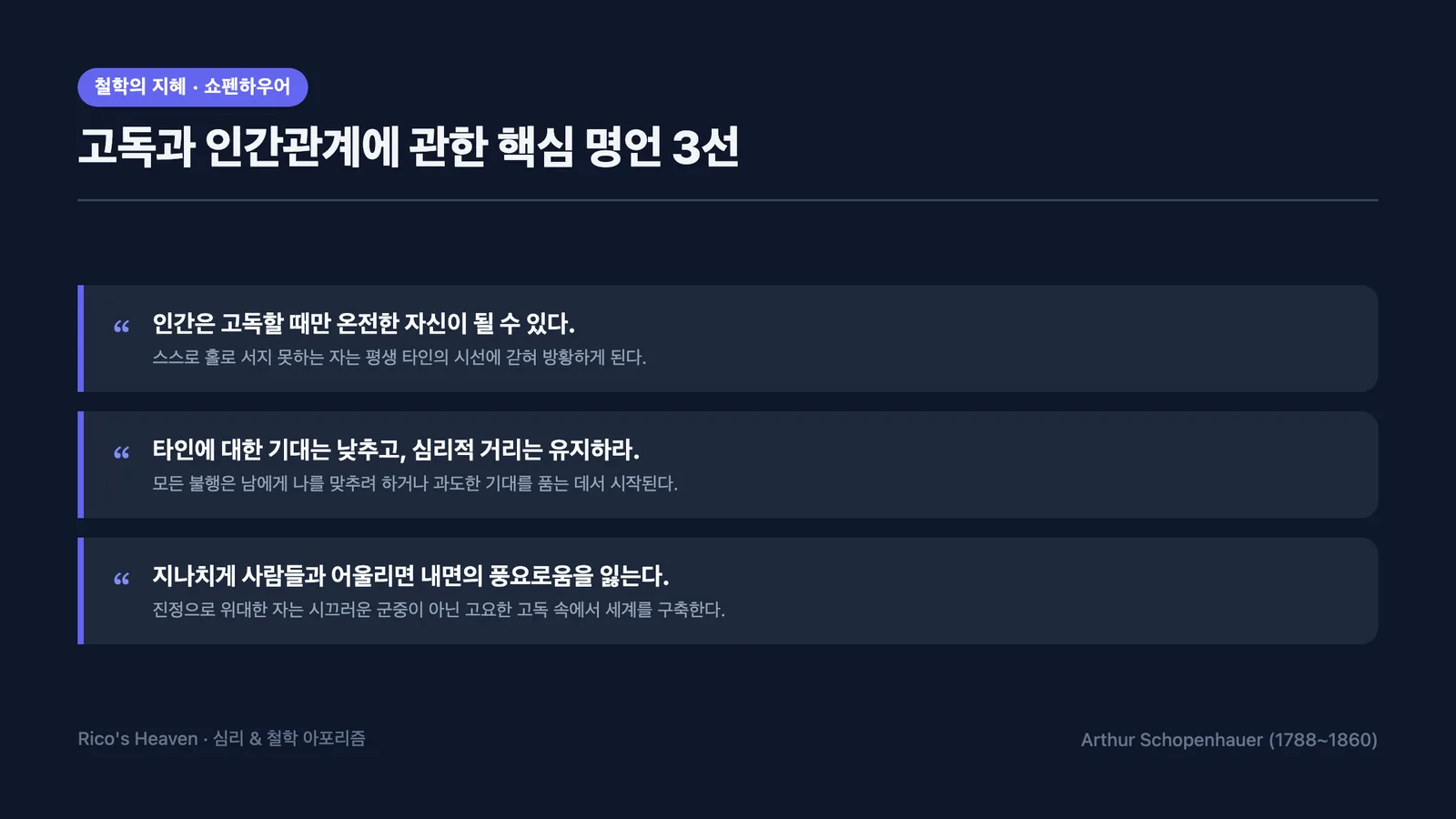
His advice remains timeless: "Keep expectations low and maintain healthy psychological boundaries." The only true safeguard for mental peace is learning to stand firmly on one's own feet.
4. Frequently Asked Questions (FAQ)
Q1. Doesn't having very few friends harm one's professional or social life?
Answer: Professional decorum must be distinguished from private intimacy. Self-contained individuals often excel in workplace environments by avoiding petty office politics and drama, earning respect through consistent competence and clear etiquette.
Q2. What is the difference between Loneliness and Solitude?
Answer: 'Loneliness' is a state of painful deficiency and isolation, whereas 'Solitude' is a deliberate, joyful state of inner abundance and peace. Those who master solitude are never lonely when alone.
Q3. How should one begin decluttering exhausting relationships?
Answer: Start by bowing out of group chats and obligatory gatherings that drain your energy. Stop reaching out to acquaintances who only communicate out of convenience. Use that recovered time for personal routines such as fitness, reading, or deep focus.
5. Total Reflection & Final Thoughts
Reflecting on this topic today, I summarize my takeaways across three dimensions:
- Clarity of Connection (Cleanliness): Freeing oneself from emotional friction and forced networking brings remarkable clarity and peace to daily life.
- Depth of Growth (Flavor): The fruits of solitude — deep contemplation, focused reading, and self-mastery — offer a lasting satisfaction far richer than any fleeting party.
- Inner Attitude (Kindness): Real self-worth begins when you direct your highest care and discipline toward yourself, unaffected by the judgments of others.
Moving forward, rather than expanding social circles to meet external expectations, I will continue cultivating quiet resilience and embracing the power of solitude. 👍👍👍