Reflecting on terminal AI coding agent workflows on Wednesday, August 19, 2026.
The most transformative trend in modern software engineering is the rise of autonomous terminal AI coding agents. Moving far beyond copy-pasting snippets from a browser window, AI agents now live directly inside developer terminals—reading codebases, executing shell commands, running tests, and completing Git commits autonomously. ⚡
Having deployed both tools extensively across production codebases and automated pipelines, here is a practical comparison of their architectural philosophies, memory configurations, and a battle-tested dual-agent setup.
1. Claude Code vs Gemini CLI: Key Differences
While both tools function as Agent Harnesses that orchestrate tool execution and file manipulation, their underlying models and core design philosophies differ significantly.
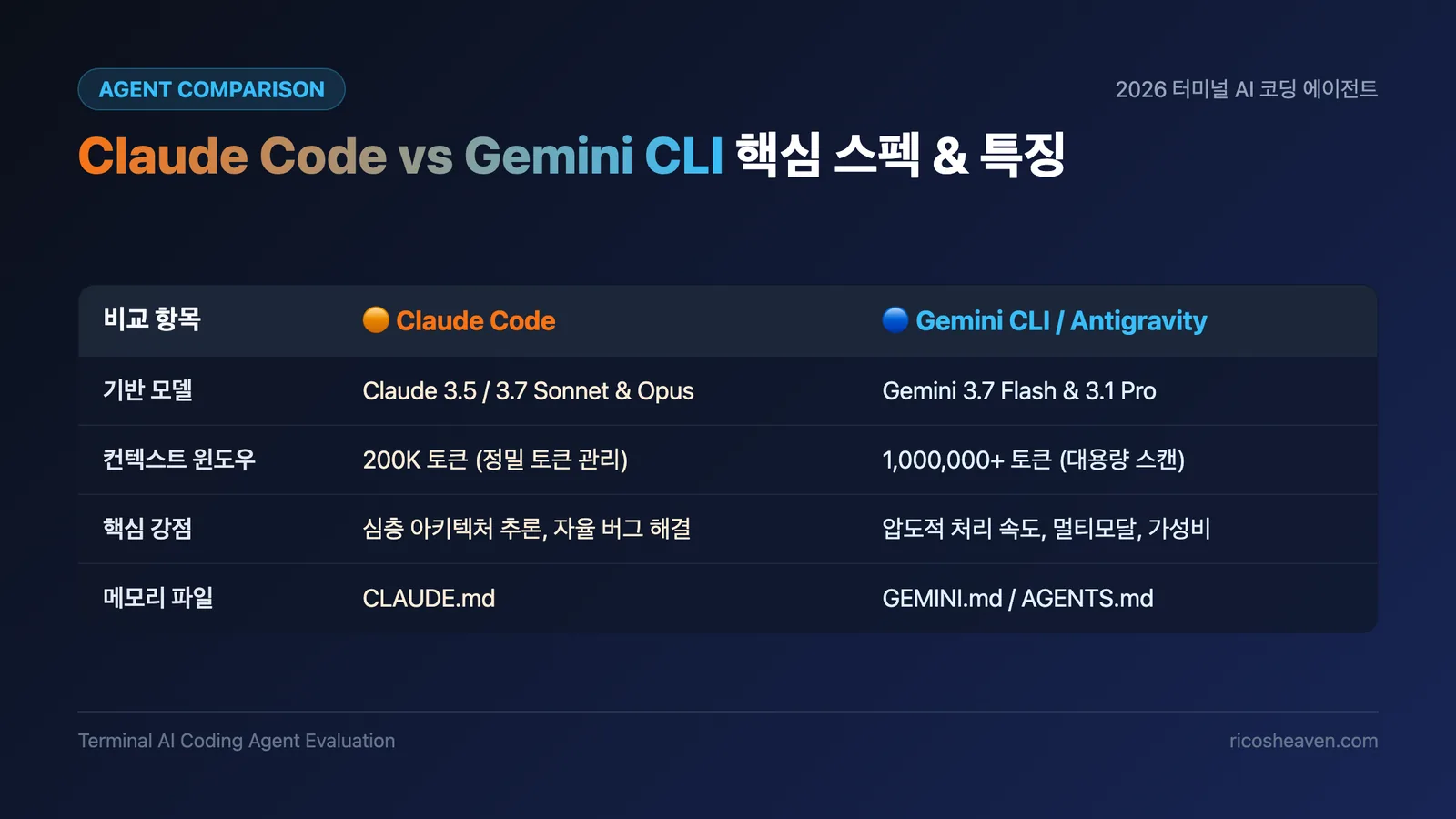
| Feature | 🟠 Claude Code | 🔵 Gemini CLI (Antigravity) |
|---|---|---|
| Core Model | Claude 3.5 / 3.7 Sonnet & Opus | Gemini 3.7 Flash & 3.1 Pro |
| Context Window | 200K tokens (Token-efficient) | 1,000,000+ tokens (Massive context) |
| Key Strength | Deep architectural reasoning & bug solving | Blazing execution speed, multimodal, cost efficiency |
| Project Memory | CLAUDE.md |
GEMINI.md / AGENTS.md |
Claude Code: Deep Reasoning and Unrivaled Autonomy
Claude Code stands out in complex, multi-file refactoring and elusive bug hunting. It adheres strictly to project policies and demonstrates exceptional autonomous determination—iterating relentlessly until the root cause is resolved and verified. 🛠️
Gemini CLI (Antigravity): Speed and 1M+ Context Window
Gemini CLI shines with its 1M+ token context window and ultra-low latency. Ingesting hundreds of legacy files simultaneously, scanning gigabyte-scale logs, and processing multimodal assets (images/PDFs) are effortlessly handled with unmatched responsiveness. 🚀
2. Memory Architecture: CLAUDE.md vs GEMINI.md
Configuring persistent agent memory at the project root ensures the AI respects repository-specific guidelines.
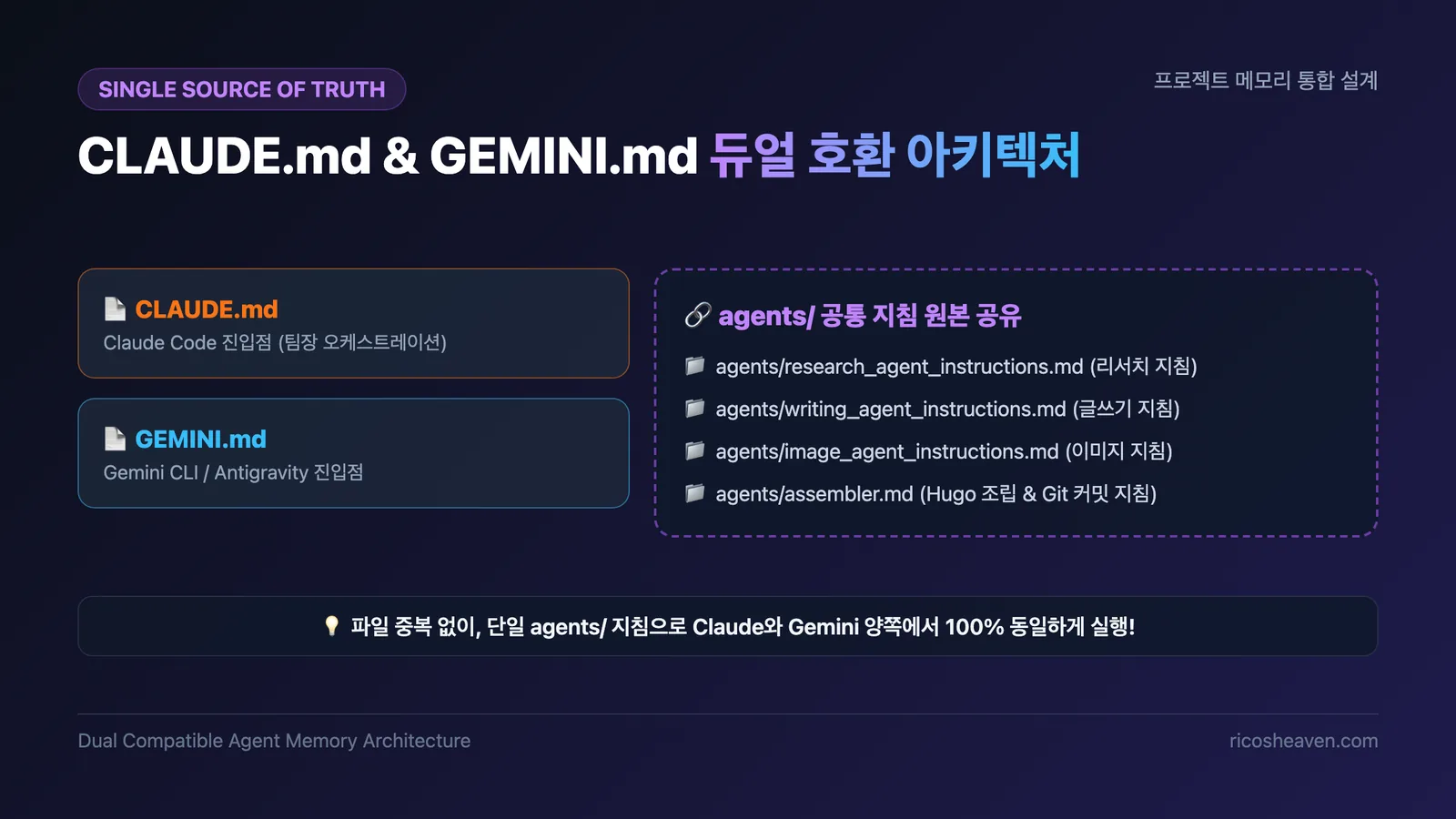
CLAUDE.md: The entry point loaded at the start of Claude Code sessions.GEMINI.md: The entry point referenced by Gemini CLI / Antigravity.AGENTS.md: An emerging vendor-neutral cross-tool standard.
Pro-Tip: Single Source of Truth Dual Compatibility
Maintaining duplicate rules across files creates maintenance overhead.
By storing modular guidelines in a shared agents/*.md directory and configuring both CLAUDE.md and GEMINI.md to reference them, you achieve 100% pipeline parity across both agents. 👍
3. Subagents vs Skills: Modular Delegation
Both ecosystems provide modular delegation to prevent primary session context degradation.
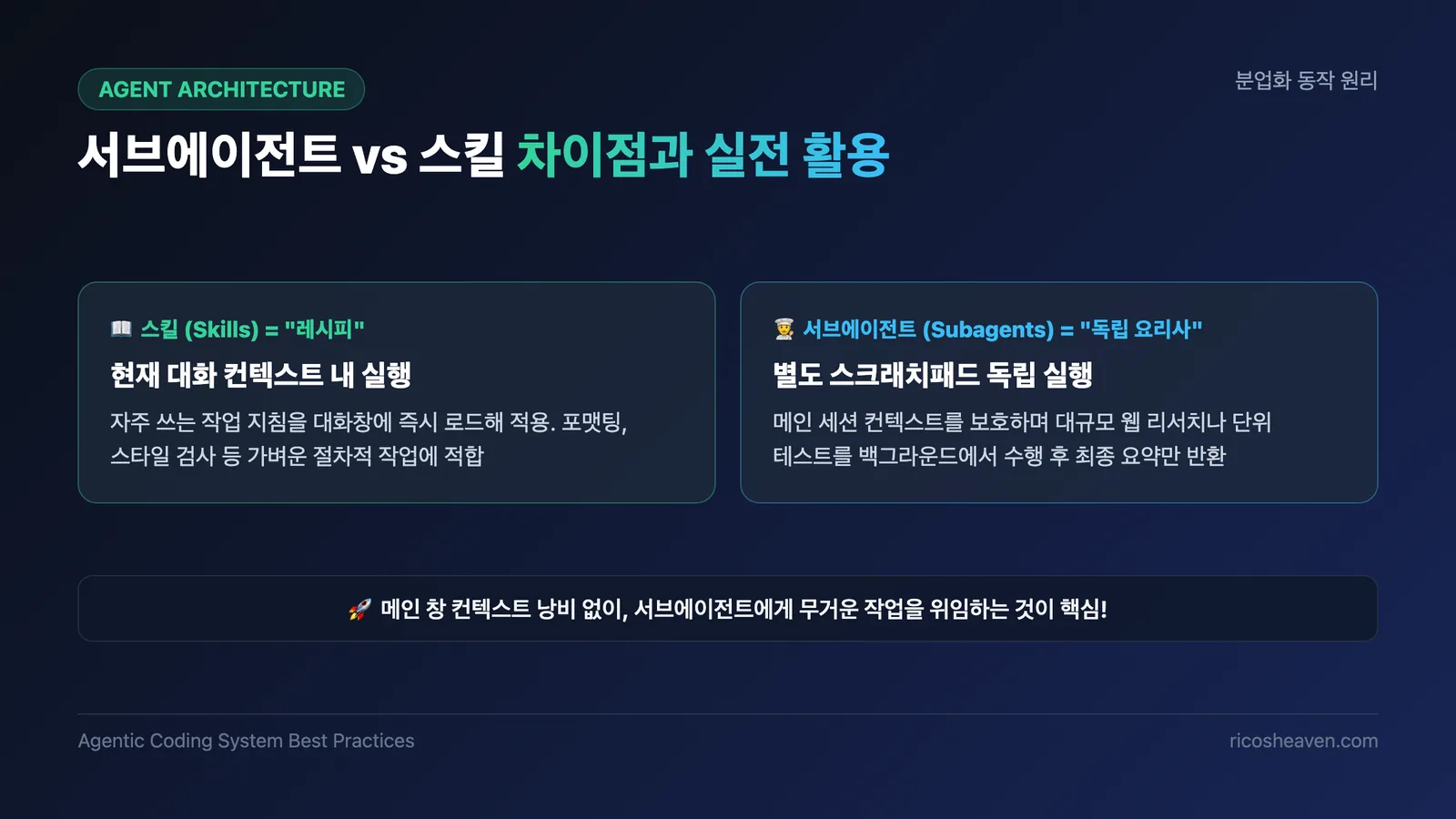
- Skills: Reusable procedural recipes injected into the active conversation context for standard formatting and validation.
- Subagents: Independent workers spawned in isolated scratchpads with their own toolsets. They conduct extensive research or testing without polluting the main window, returning concise summaries.
4. The Two-Track Developer Workflow
To maximize engineering velocity, consider this optimal division of responsibilities:
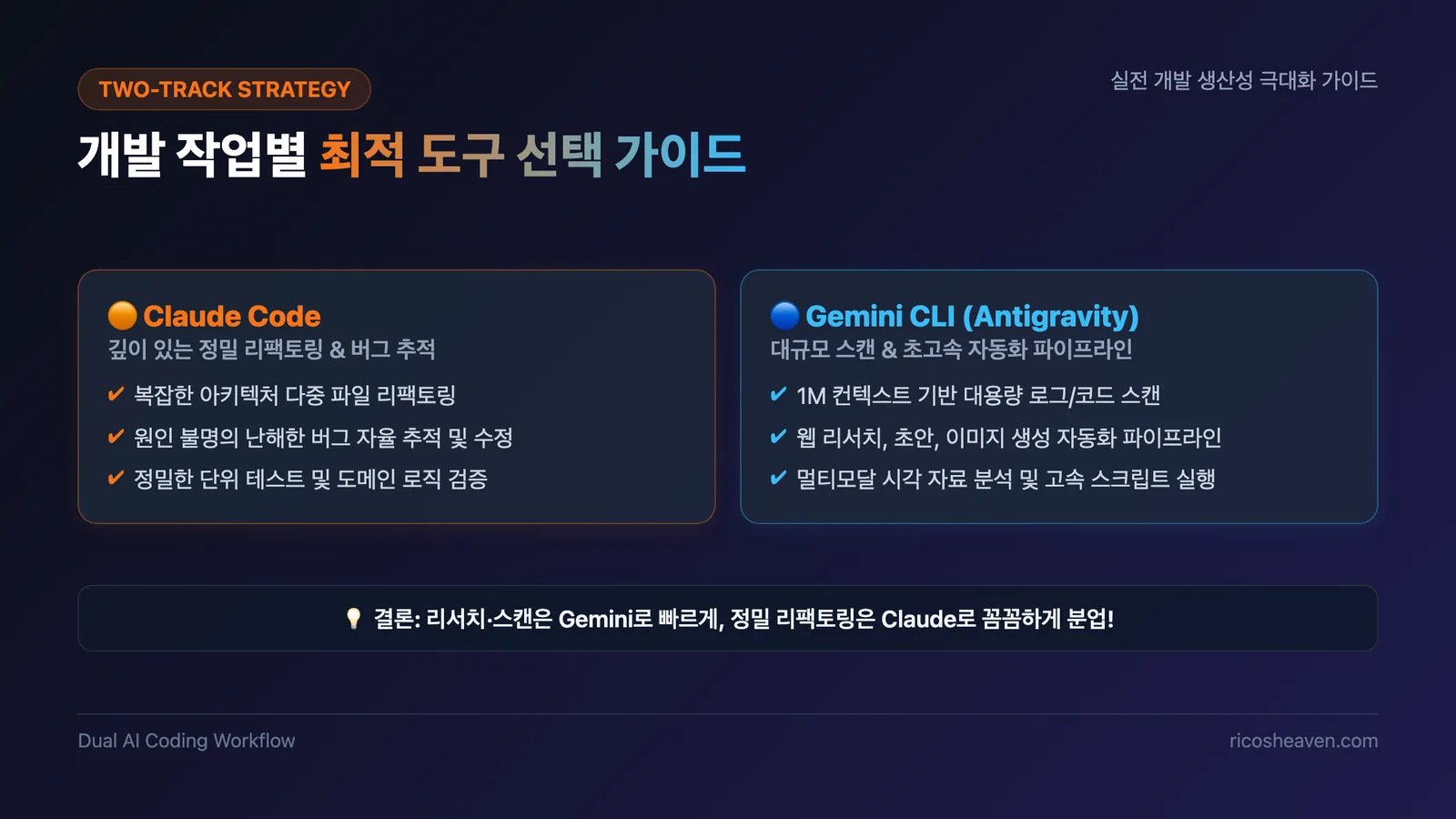
Use Gemini CLI For:
- Scanning vast codebases, log repositories, and large docsets
- High-throughput automated multi-stage research and draft pipelines
- Multimodal asset parsing and rapid script execution
Use Claude Code For:
- Architectural refactoring across highly interconnected modules
- Root-cause diagnosis of subtle concurrency and state bugs
- Autonomous long-horizon tasks requiring deep reasoning loops
Summary
- Reasoning Precision: Claude Code remains the benchmark for intricate logic and architectural discipline.
- Speed & Context: Gemini CLI leads in 1M+ token capacity, rapid turnaround, and cost efficiency.
- Productivity: Embracing a two-track strategy—using Gemini for fast scans/pipelines and Claude for deep surgical edits—yields the highest developer output.
Leveraging the right tool for the right task dramatically reduces developer fatigue while doubling output speed. Setting up a unified dual environment is one of the highest-leverage investments you can make in 2026.