Saturday, August 22, 2026 — With generative AI tearing down traditional technical barriers, the ambition to launch and operate a full-scale digital venture as a solo creator has never been more attainable.
However, aspiring solopreneurs frequently make a fatal mistake: building what they subjectively want to build based on pure intuition, only to discover post-launch that zero real users care about the solution.
By examining the real-world methodology from the "AI Solopreneurship (EP1)" case study, this guide outlines how to extract quantitative Pain Point Scores from YouTube community comments using Claude to validate product-market fit before writing a single line of production code.
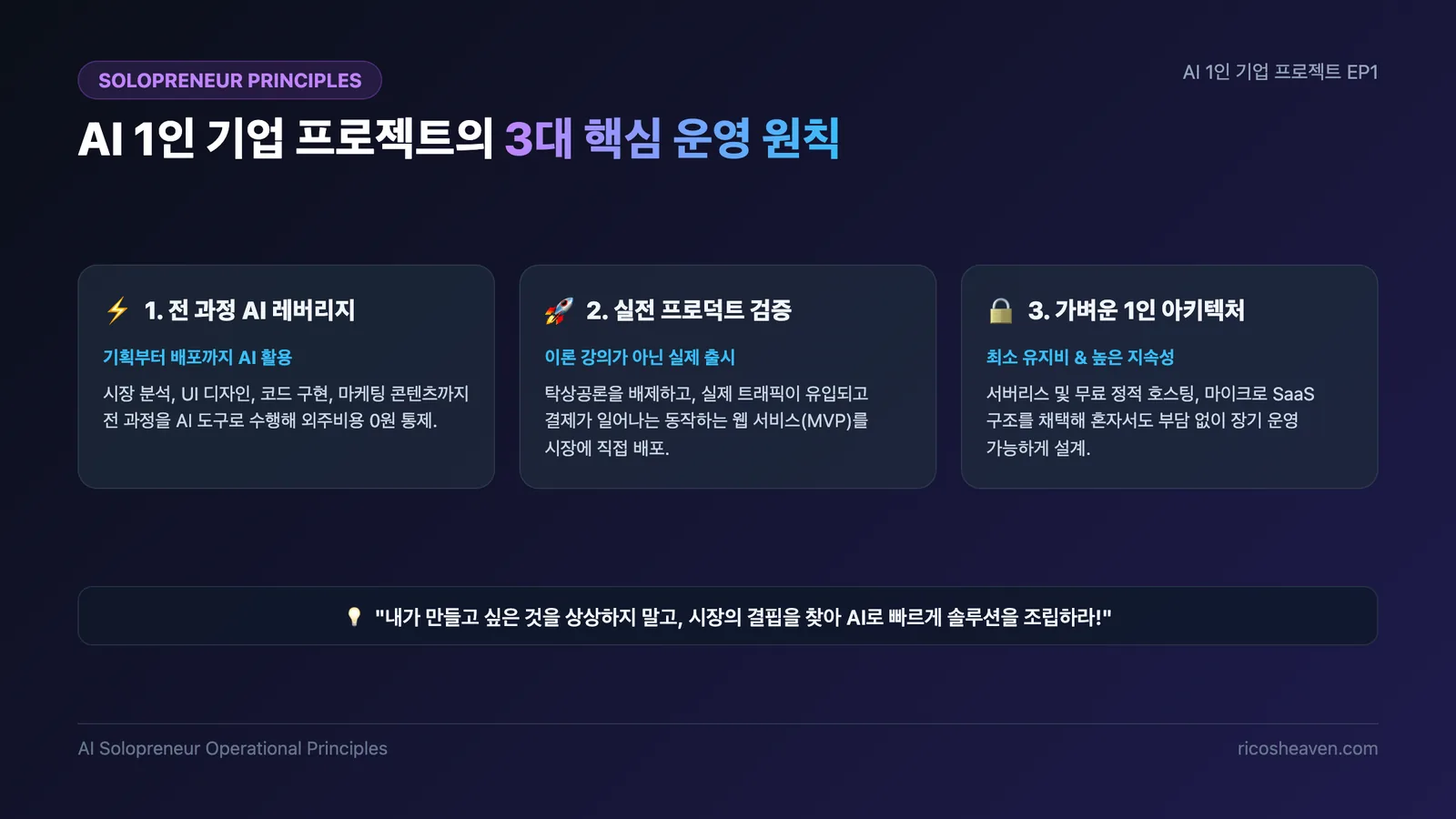
1. The 3 Core Principles of an AI Solopreneur
Operating as a solo business founder demands a fundamentally streamlined execution model:
- Full-Stack AI Leverage Across the Lifecycle: Automate market research, data ingestion, UI/UX wireframing, full-stack development, and marketing copy through AI tools, reducing external agency costs to zero.
- Proof via Working Production Releases: Move beyond theoretical frameworks and deploy working Minimum Viable Products (MVPs) that actively attract users and process transactions.
- Ultra-Lean & Sustainable Architecture: Adopt serverless infrastructure, free static hosting, and micro-SaaS design patterns that allow a solo operator to maintain systems effortlessly.
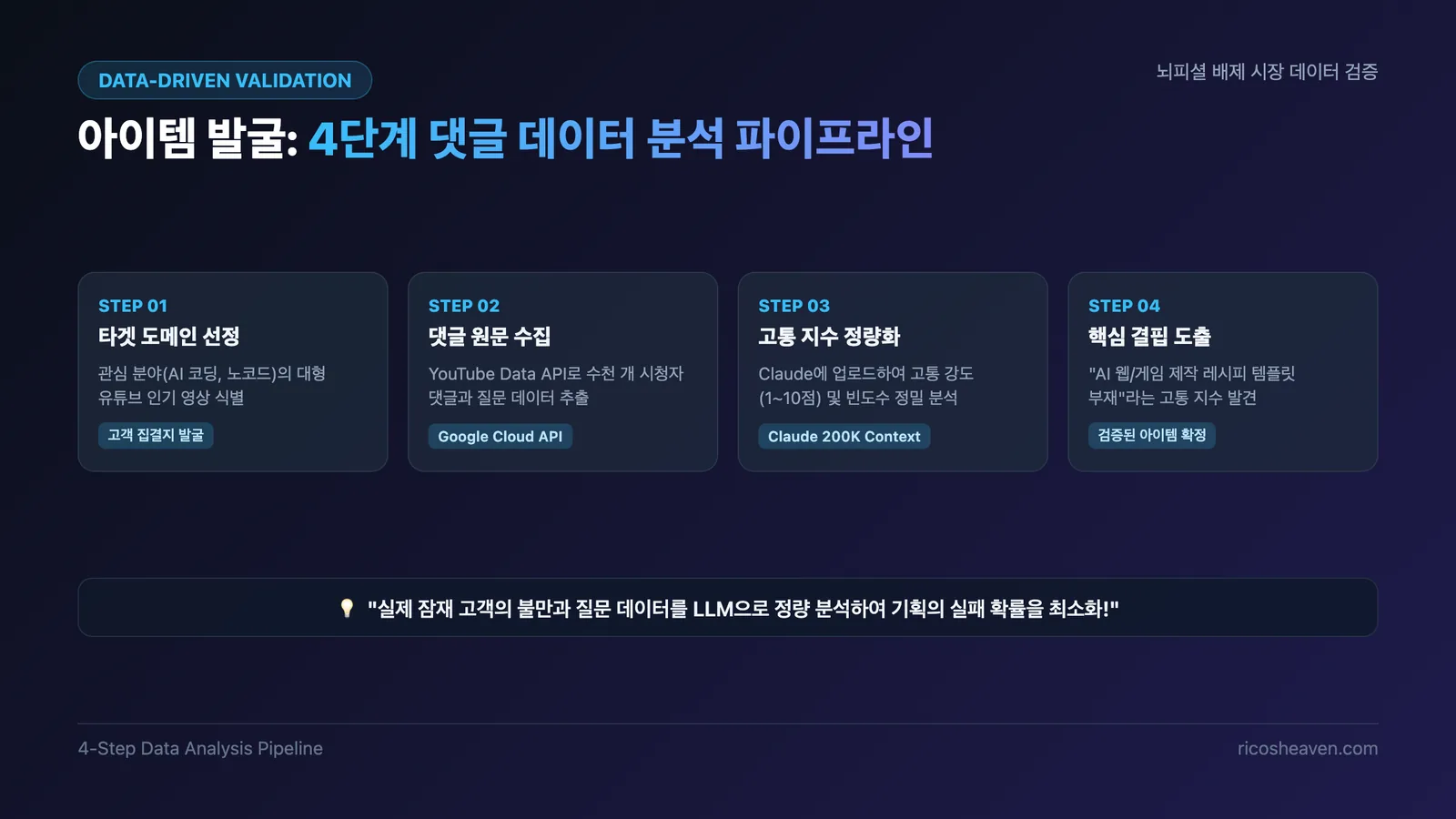
2. The 4-Step Data-Driven Validation Pipeline
Rather than guessing customer intent, follow this systematic four-step extraction process:
Step 1: Identify Niche Community Hubs
Target top-performing YouTube channels and viral videos in your chosen domain (e.g., AI coding assistants, no-code development, workflow automation) where thousands of potential users gather.
Step 2: Scrape Raw Comment Data via YouTube API
Utilize the Google Cloud YouTube Data API to programmatically export thousands of user comments, questions, and frustrations into structured JSON/CSV files.
Step 3: Quantify Pain Point Scores (1–10) with Claude
Upload the dataset into Claude Projects and execute analytical clustering prompts:
- Core Analytical Prompt: "Analyze these user comments to identify recurring obstacles, complaints, and unmet needs. Assign a Pain Severity Score from 1 to 10 and output the findings with frequency rankings in a structured table."
Step 4: Identify High-Severity Bottlenecks
The data revealed an overwhelming pain cluster (Scores 8–10): "Users recognize the power of AI, but lack concrete, step-by-step 'recipes' and templates that connect prompts to functional web apps and games."
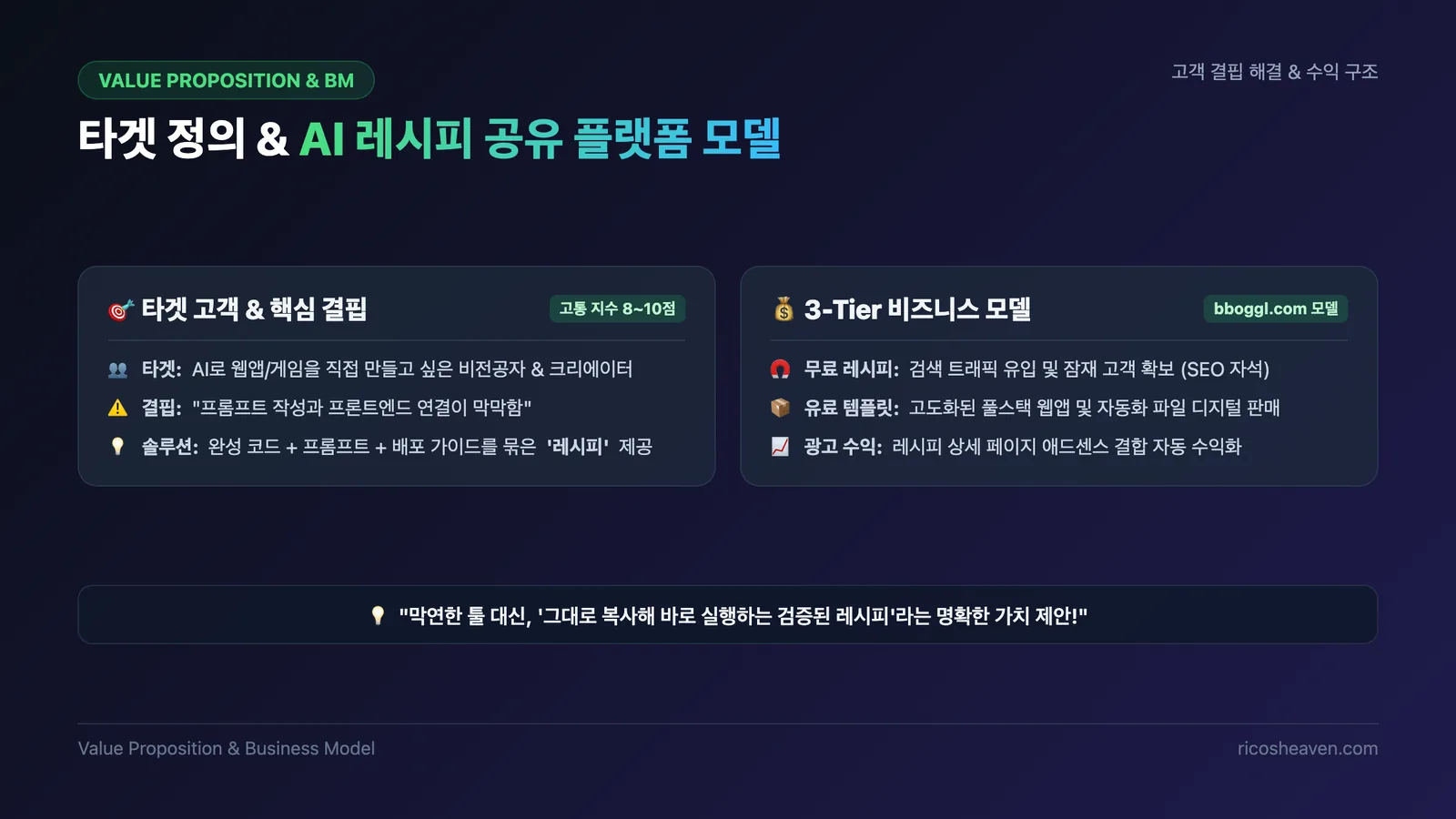
3. Defining the Value Proposition & Business Model
Transforming validated pain points into an actionable software product structure:
1. Target Audience
- Non-technical creators, hobbyists, and early developers who want to build AI-powered digital assets without struggling over syntax and deployment.
2. The Solution: AI Recipe Sharing Platform (bboggl.com)
- Package working web applications, game demos, exact prompts, and deployment scripts into standardized 'Recipes'.
- Users can directly copy, adapt, and launch functioning products in minutes.
3. Sustainable Multi-Tier Monetization
- Free Tier Recipes: Acts as a lead magnet and search engine optimization (SEO) growth engine.
- Premium Asset Packs: Paid digital downloads for advanced full-stack apps and automation pipelines.
- Programmatic Advertising (AdSense): Embedded monetization on high-traffic recipe viewer pages.
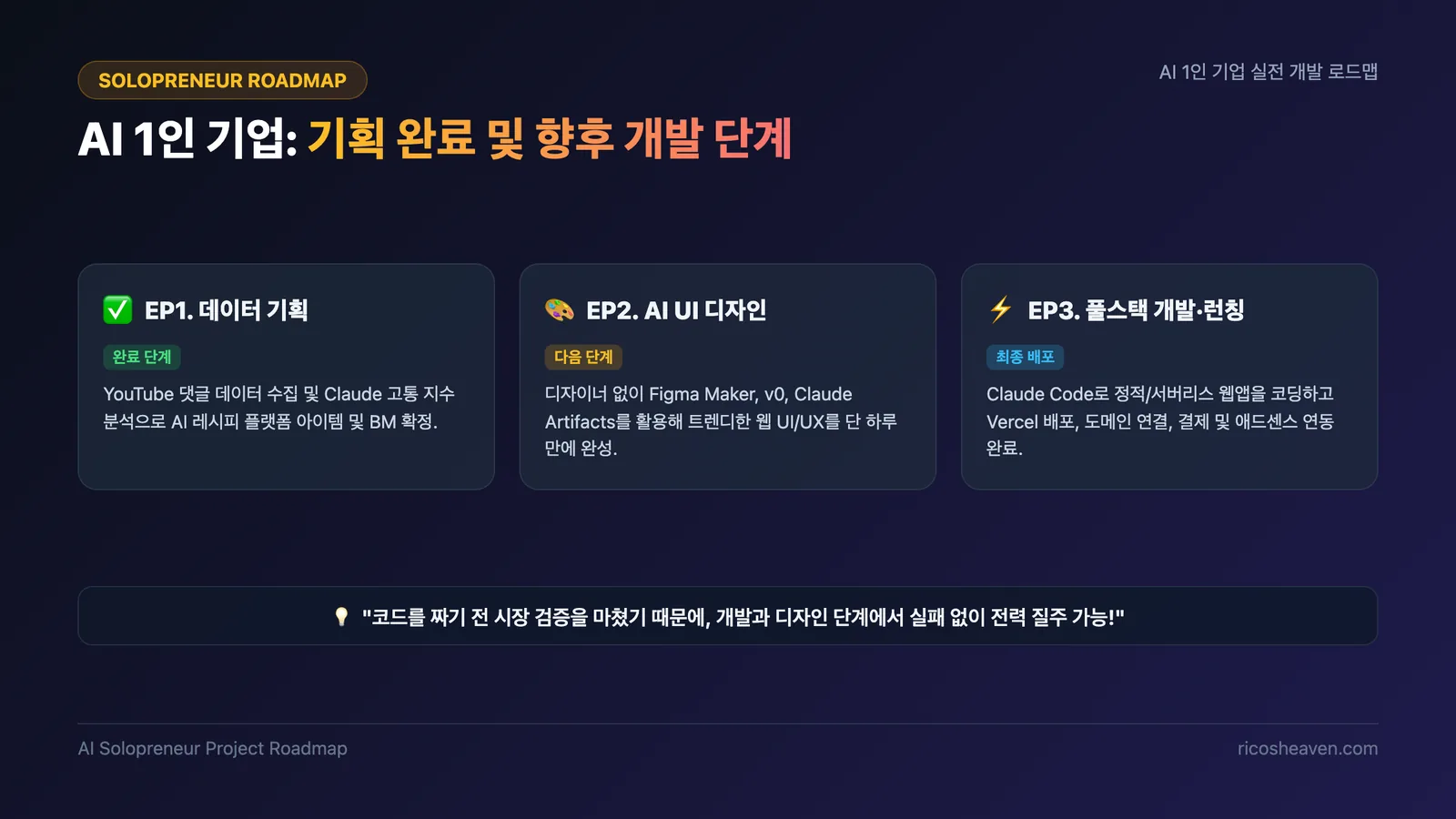
4. Solopreneur Retrospective: Pre-Validation First
Even the most powerful AI coding agents will only accelerate failure if the product points in the wrong direction.
The essence of this EP1 workflow lies in securing empirical proof of customer pain before writing a single line of code.
- Data over Guesswork: Clustering thousands of community comments to extract validated demand.
- Rapid Prototyping Readiness: With a validated value proposition, subsequent design (Figma Maker) and implementation phases (Claude Code) can execute in days rather than months.
In the age of AI, success for solo builders is dictated not merely by coding speed, but by the ability to discover genuine friction and orchestrate AI tools into cohesive solutions.